Landscape design for waterfront and Long Island Sound properties should respond to the conditions that make these sites different from typical Westchester yards. Salt-carrying winds, open exposure, waterfront views, changing elevations, and the way people use shoreline-facing spaces can all influence the final design.
Good waterfront landscape design in NY is less about adding more features and more about placing the right elements in the right locations. The goal is to create a landscape that feels connected to Long Island Sound while remaining practical, comfortable, and visually balanced.
Start With Exposure, Not Just Property Size
Two waterfront properties of similar size can require completely different landscape approaches. One may be protected by neighboring homes and mature trees, while another may be directly exposed to wind coming off the Sound.
That exposure affects where plants are likely to perform well, where outdoor seating feels comfortable, and which areas may need more protection. A shoreline-facing section may need tougher plant material, while an area closer to the house may support a broader planting palette.
Preserve the View Without Leaving the Yard Bare
A common challenge with Long Island Sound landscaping is balancing open views with enough landscape structure. Removing too much visual interest can leave a property feeling unfinished, while placing tall shrubs or trees in the wrong areas can gradually block the water view.
A better approach is to build the landscape in layers:
- Keep lower plantings near important sightlines
- Place taller shrubs toward the sides of the property
- Use specimen trees where they frame rather than obstruct views
- Keep major seating areas visually connected to the water
- Use walkways to direct movement toward key viewing points
This creates definition while keeping the relationship between the home, landscape, and Sound open and intentional.
Design Planting Areas for Salt and Wind Exposure
One of the biggest differences between inland and waterfront properties is plant exposure. Salt spray and persistent wind can stress plants that might otherwise perform well in other parts of Westchester.
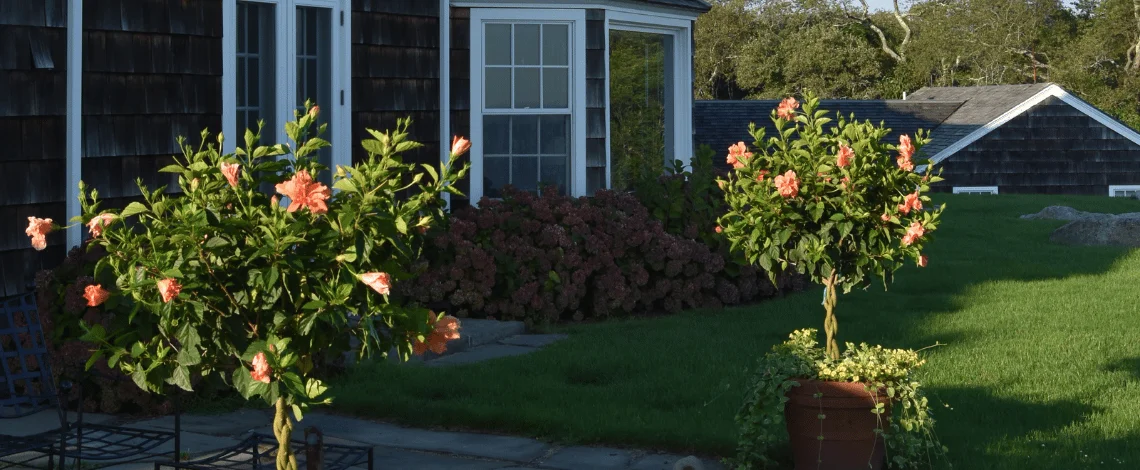
That makes salt-tolerant plants for Westchester waterfront properties especially important in exposed areas. Options may include bayberry, inkberry holly, eastern red cedar, switchgrass, little bluestem, and beach plum.
The entire property does not need to rely on coastal-tolerant plants. Areas protected by the home, larger shrubs, or existing trees may allow a wider variety of plant material, adding depth without ignoring shoreline conditions.
Create Comfortable Spaces in an Open Waterfront Setting
Water views are a major advantage, but open shoreline properties can sometimes feel overly exposed. Landscape design can create a greater sense of comfort without closing off the view.
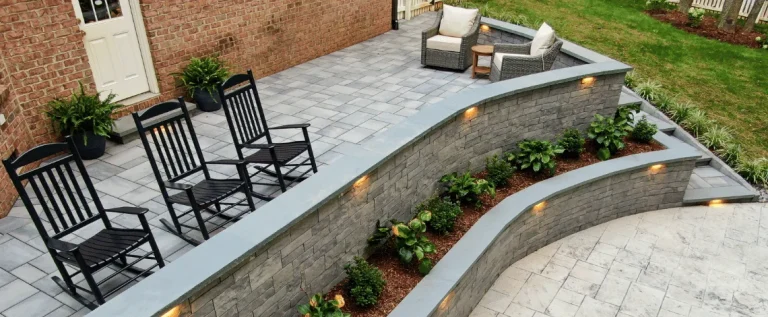
Patios, planting beds, low walls, and strategically placed trees or shrubs can help define outdoor areas while maintaining sightlines. A dining space may benefit from a more protected location, while lounge seating can be oriented toward the best view.
Joseph Bulfamante & Son’s hardscaping and outdoor living services can support these areas with patios, walkways, retaining walls, and other features where they fit the property.
Use Hardscaping to Handle Waterfront Transitions
Waterfront properties often contain several transitions between the house, lawn, patios, planting areas, and lower shoreline-facing sections. These changes should feel deliberate rather than like separate areas added at different times.
Hardscaping can help create that structure:
| Landscape transition | Possible design feature |
| House to outdoor living area | Patio or terrace |
| Patio to lawn | Defined edge or walkway |
| Upper yard to lower area | Steps or retaining wall |
| Side yard to waterfront | Paver or stone path |
| Seating area to planting beds | Low wall or landscape border |
Joseph Bulfamante & Son provides patios, walkways, retaining walls, and other hardscape installation services that can be incorporated where the site calls for them.
Pay Attention to What Happens Behind the Main View
Because the shoreline naturally gets most of the attention, other parts of a waterfront landscape can easily become an afterthought. Side yards, entrances, service areas, and transitions around the home still need to work as part of the overall design.
A well-planned property creates continuity from the street-facing entrance to the waterfront. Repeating certain planting styles, paving materials, or landscape forms can help the front, side, and rear areas feel connected.
Add Lighting That Supports the View After Dark
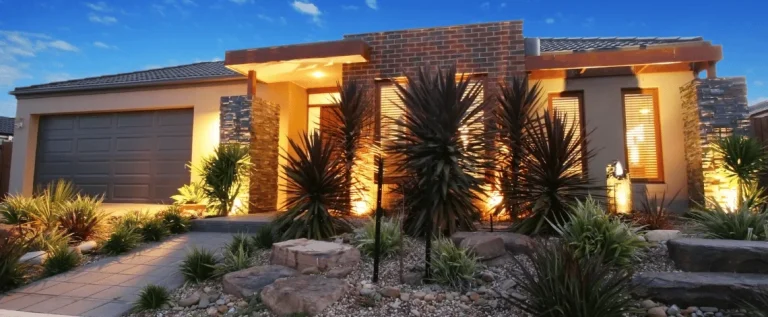
Landscape lighting on a waterfront property should improve visibility without overwhelming the setting. Too much brightness can compete with the nighttime view and make the landscape feel harsher than intended.
Instead, lighting can be concentrated around areas where it serves a clear purpose:
- Steps and changes in elevation
- Walkways between outdoor areas
- Patio and seating edges
- Selected trees or architectural features
- Retaining walls and stonework
Joseph Bulfamante & Son provides landscape lighting that can be incorporated into the design to improve evening use while keeping the overall effect subtle.
Consider Water Movement When Planning the Layout
Drainage still matters on waterfront properties, but it should be considered as part of the site’s overall layout rather than treated as a separate feature. Rainwater moving across patios, slopes, planting beds, or compacted lawn can affect how usable different parts of the property remain after storms.
Grading and drainage solutions may be needed where water repeatedly collects or travels through important outdoor areas. Joseph Bulfamante & Son offers grading and drainage services that can be incorporated when site conditions require them.
Create a Landscape That Belongs on Long Island Sound
The strongest coastal landscaping ideas come from working with the property’s setting rather than applying the same design approach used farther inland. Views should guide plant heights, exposure should influence plant selection, and outdoor spaces should be positioned around both comfort and scenery.
Joseph Bulfamante & Son provides landscape design and installation for Westchester properties, including communities along Long Island Sound. Depending on the site, landscape design can be supported by hardscaping, outdoor living features, drainage, irrigation, tree care, and lighting where those services genuinely contribute to the property.
Contact us today to discuss landscape design ideas for a waterfront property along Long Island Sound.